In early childhood education, two prominent approaches stand out: Montessori and Reggio Emilia. While both prioritise the holistic development of children, they have distinct approaches and philosophies. Understanding these differences can help parents and educators make informed decisions about which approach aligns best with their values and goals for children’s learning.
Montessori Method:
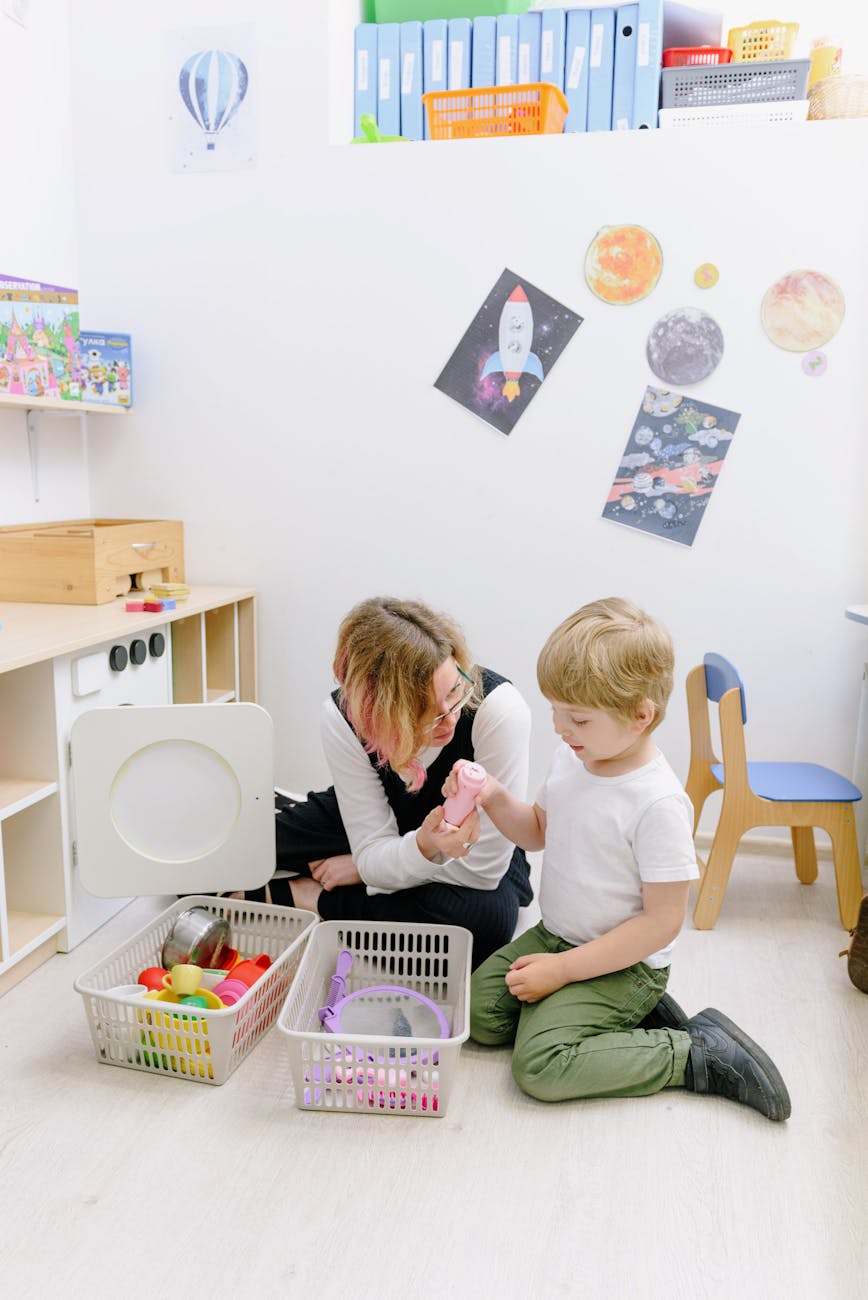
Developed by Dr. Maria Montessori in the early 20th century, the Montessori method is founded on the principles of independence, freedom within limits, and respect for a child’s natural development. In a Montessori classroom, children are encouraged to explore their interests at their own pace, with teachers serving as guides rather than instructors. The environment is carefully prepared with materials designed to stimulate learning and foster independence, such as self-correcting puzzles and practical life activities like pouring and dressing oneself. Montessori education emphasises hands-on learning, uninterrupted work periods and mixed-age classrooms, promoting collaboration and peer learning.

Reggio Emilia Approach:
Originating in the town of Reggio Emilia, Italy, after World War II, the Reggio Emilia approach is characterised by its belief in the hundred languages of children, emphasising the role of creativity and expression in learning. In Reggio Emilia schools, the environment is considered the third teacher, alongside adults and peers. Classrooms are often filled with natural light, open spaces, and materials that provoke curiosity and exploration, including art supplies, mirrors, and natural elements like rocks and shells. Learning in Reggio Emilia is project-based, with children encouraged to pursue topics of interest through long-term investigations. Teachers act as facilitators, documenting children’s experiences and reflections to inform the curriculum and create a collaborative learning community.
Key Differences:
- Teacher Role: In Montessori classrooms, teachers take on a more observational role, intervening only when necessary to support a child’s learning. In contrast, Reggio Emilia teachers actively engage with children as co-learners, fostering dialogue and collaboration.
- Curriculum: Montessori education follows a structured curriculum based on sequential learning materials, while the Reggio Emilia approach is more emergent, driven by children’s interests and experiences.
- Environment: Montessori environments are carefully designed with specific learning materials, while Reggio Emilia environments are dynamic and open-ended, encouraging exploration and creativity.
- Assessment: Montessori education often emphasizes individual progress and mastery of skills, while Reggio Emilia focuses on documenting children’s learning processes and fostering a sense of community and collaboration.
Both Montessori and Reggio Emilia offer rich, child-centred approaches to education, emphasising the importance of independence, creativity and community. While they have distinct philosophies and practices, the best approach for a child ultimately depends on their unique needs, interests, and learning style.


Leave a Reply