Play is a fundamental part of childhood, serving as a medium for children to explore, experiment and make sense of the world. In early childhood education, blending play-based learning with academic skills is an approach that enhances children’s engagement and development while fostering literacy, numeracy and social-emotional learning.
The Importance of Play in Learning
Play-based learning is grounded in the belief that children learn best through activities they find enjoyable and meaningful. According to research, play encourages cognitive, social and emotional growth by allowing children to explore ideas, solve problems and interact with their peers. As children navigate play scenarios, they are constantly learning—whether it’s building language skills through role play, counting objects in a game, or negotiating rules with friends.
Integrating Literacy Through Play

Literacy development can be encouraged through various playful activities, many of which involve rich storytelling and language use. Here are some strategies to integrate literacy into play-based learning:
- Story-Driven Role Play: Create a “story area” where children can act out familiar tales, enhancing their comprehension, vocabulary and narrative skills. For example, children can retell The Three Little Pigs using puppets or props, allowing them to explore character, setting and sequence in a playful manner.
- Reading Nooks in Block Play: Build reading nooks during block play, encouraging children to engage in independent or shared reading. Placing books related to their block-building themes, such as construction or city planning, builds literacy in a context that resonates with their current play.
- Writing in Play Scenarios: Add materials such as notepads, pencils and menus to imaginative play areas, such as a pretend restaurant. Children can take orders or make shopping lists, practicing early writing skills in a low-pressure, enjoyable environment.
Blending Numeracy with Play
Numeracy skills, such as counting, measuring and recognising patterns, naturally lend themselves to playful contexts. Here are some ideas for integrating numeracy into play:
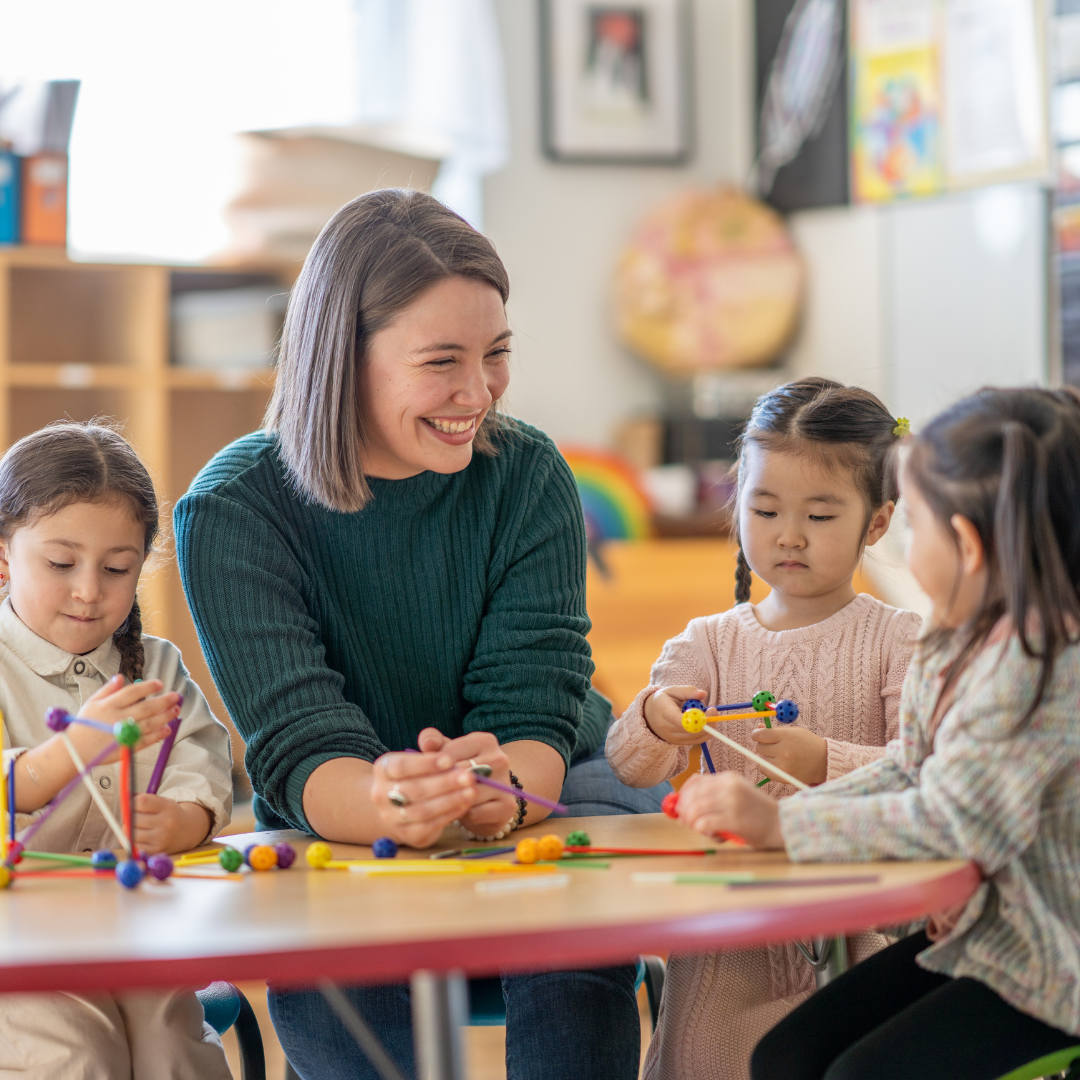
- Construction Play and Math: Building with blocks or LEGO can introduce mathematical concepts such as shape, symmetry and counting. Encourage children to build towers and count the number of blocks used or identify the geometric shapes they’ve created.
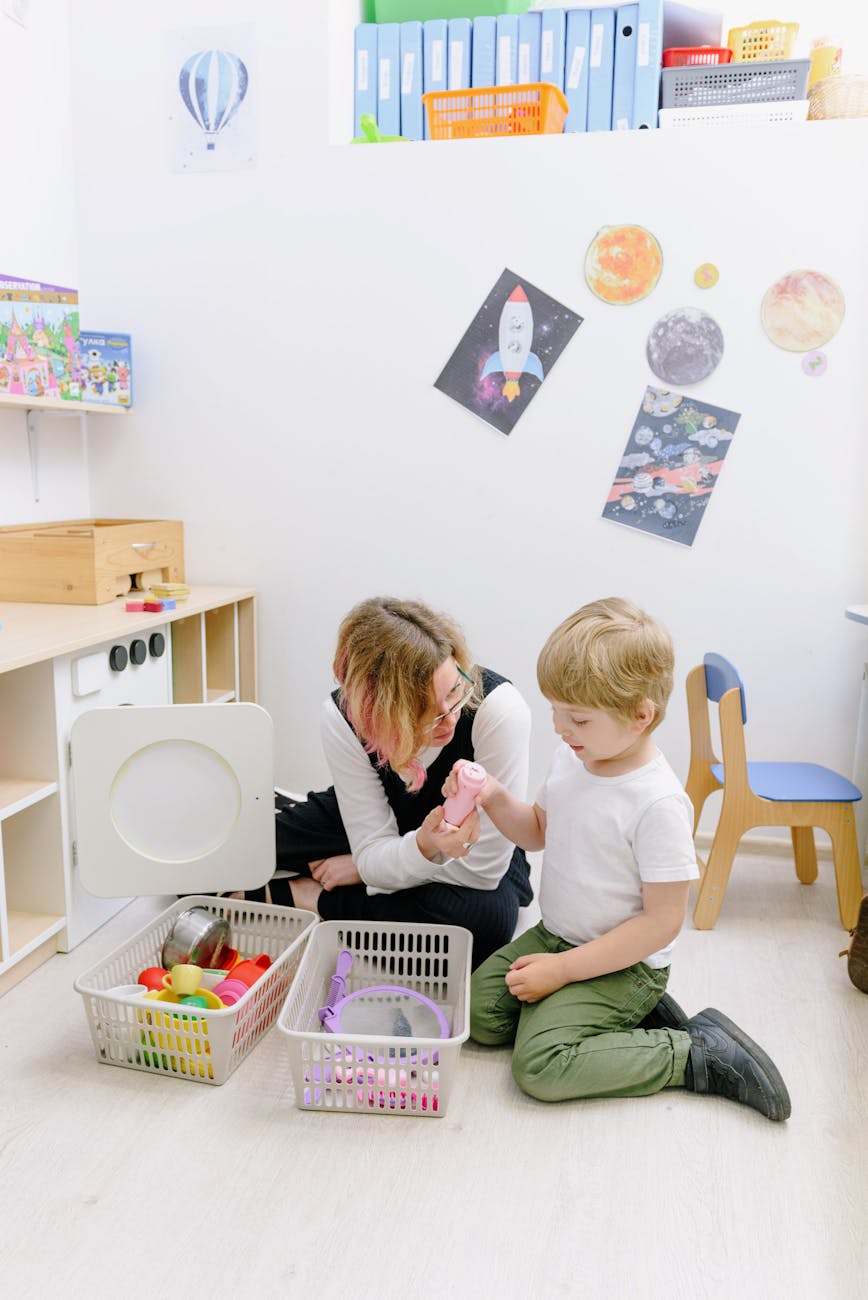
- Math in the Kitchen: A play kitchen can become a numeracy haven. Encourage children to “cook” using pretend measurements or practice dividing food portions. This not only teaches them early math skills but also supports problem-solving.
- Outdoor Numeracy: Create opportunities for counting and measurement in outdoor play by organising nature hunts where children find and count specific items such as rocks or leaves. Alternatively, they can measure the distance of their jumps, subtly incorporating the concept of length and units.
Fostering Social-Emotional Learning Through Play
Play provides an excellent avenue for children to practice and develop social-emotional skills, such as collaboration, empathy and emotional regulation. Play-based strategies can help children navigate these key life skills while fostering relationships:
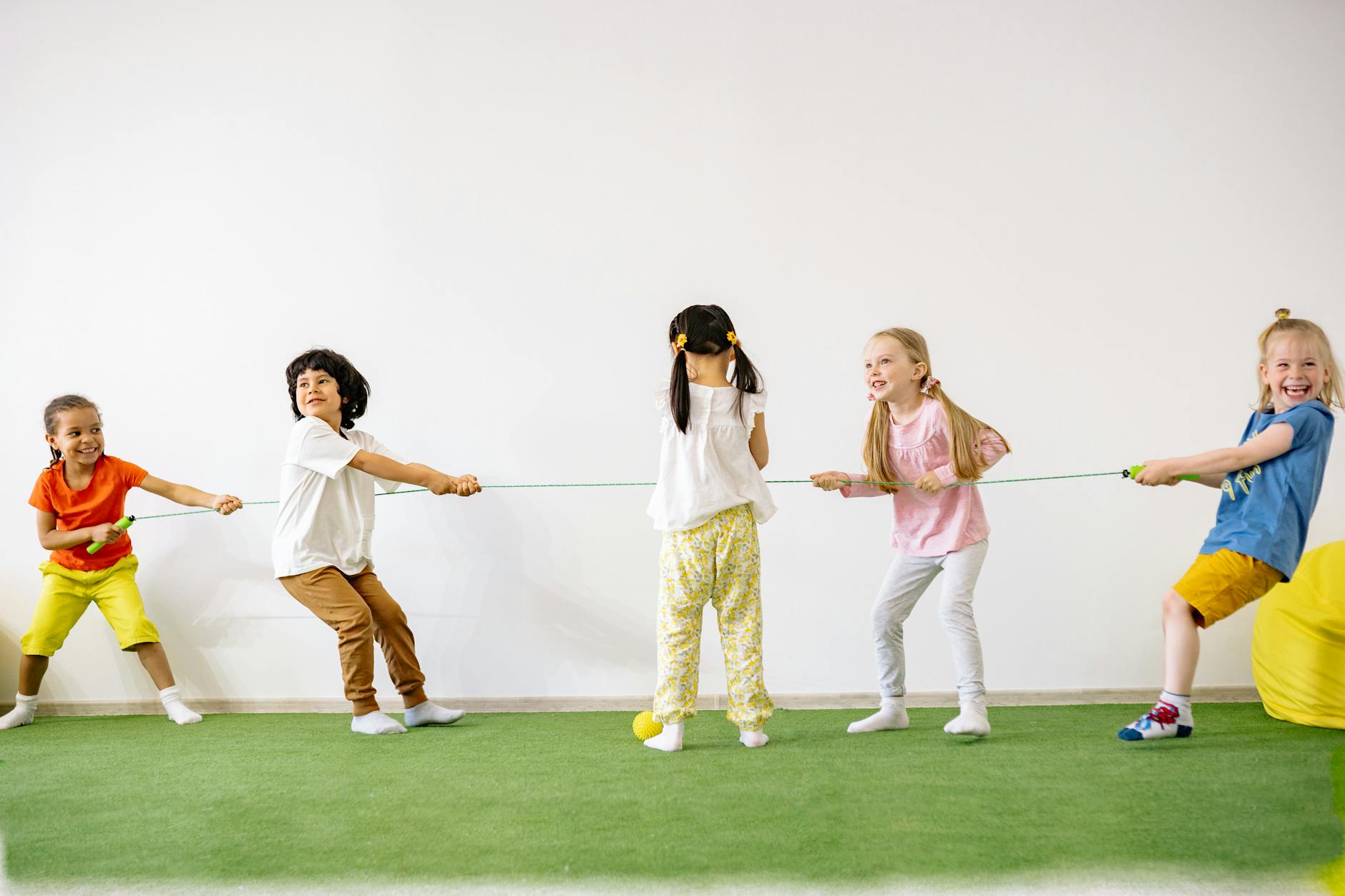
- Cooperative Games: Introduce cooperative play games where the focus is on working together, such as group building projects or role-playing scenarios where everyone has a part to play. .
- Mindful Play: Incorporate mindfulness exercises into playtime by creating “quiet zones” or sensory tables where children can relax, explore textures and reflect on their feelings. Activities like sand play or water play encourage calmness and focus, allowing children to tune into their emotions in a peaceful, sensory-rich environment.
- Conflict Resolution in Play: Conflict resolution skills can be embedded into social play by encouraging children to solve disagreements during group activities. Teachers can model phrases like, “How can we work together to solve this problem?” to guide them in managing conflicts on their own.
How Teachers Can Support Play-Based Learning
Teachers play a vital role in guiding and facilitating play-based learning. It’s essential to create a rich environment where children can explore freely, but also where academic skills are intentionally embedded. Here are some tips for effectively supporting play-based learning:
- Set Up Learning-Enriched Play Areas: Design classroom environments with multiple play stations that promote literacy, numeracy and SEL. Rotate materials regularly to keep children engaged and curious.
- Observe and Extend Learning: During play, observe how children are interacting and find moments to scaffold their learning. If a child is playing with blocks, for example, you might ask, “How many more blocks do you need to make your tower as tall as the table?” This nudges the child to practice counting and comparison skills.
- Encourage Child-Led Play: Give children ownership over their playtime by letting them choose their activities and direct the flow of play. This autonomy helps foster a sense of agency and motivation to explore.
- Reflect and Debrief: After playtime, gather the children together to reflect on their play experiences. Ask open-ended questions such as, “What did you learn while building that tower?” or “How did it feel when you solved the problem together?” This helps reinforce the learning that took place during play.
Blending play with academic learning is not only possible but essential for early childhood education. By integrating literacy, numeracy and social-emotional learning into playful activities, teachers can provide children with rich, meaningful experiences that set the foundation for lifelong learning. Play-based learning nurtures curiosity, problem-solving and collaboration while helping children achieve essential academic milestones. The joy of learning through play fosters a love of discovery that will carry children through their educational journey and beyond.